
Loading...
"StuDIYo comes to you." 🛠️ Discover our DIY Kits with FREE DELIVERY for orders above 150 AED and In-Store Pickup.Know more
Loading...
Merging ancient history with modern craftsmanship. Discover how our Samurai workshop teaches discipline, honor, and the 'Way of the Maker'.

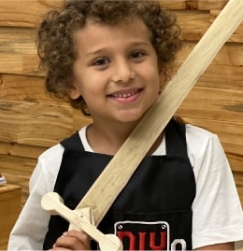
Our recent historical crafts workshop bridged the gap between feudal Japan and the modern woodshop. By exploring the world of the Samurai, students learned that true craftsmanship is as much about character as it is about skill.
The workshop began with a deep dive into the 'Bushido' code, the samurai's way of life. We discussed how discipline, respect, and focus are just as relevant to a modern maker as they were to a 16th-century warrior.
After absorbing the historical context, students moved into the 'Maker Phase,' where they translated abstract concepts into physical artifacts:
By building objects from the past, students gain a deeper appreciation for the evolution of technology. They realize that the tools they use today are part of a long lineage of human innovation.
"I never thought history could be this tactile," said 12-year-old Aiden. "Building the armor helped me understand the engineering challenges they faced. It wasn't just about looking cool; it was about functionality."
This 'Hands-on History' approach significantly improves information retention. When a child builds a piece of history, they don't just remember it. They understand it.