
Loading...
"StuDIYo comes to you." 🛠️ Discover our DIY Kits with FREE DELIVERY for orders above 150 AED and In-Store Pickup.Know more
Loading...
The 10 questions to ask before booking a kids woodworking workshop in Dubai: instructor ratios, tools, safety, and take-home projects. A parent's checklist for picking the right studio.

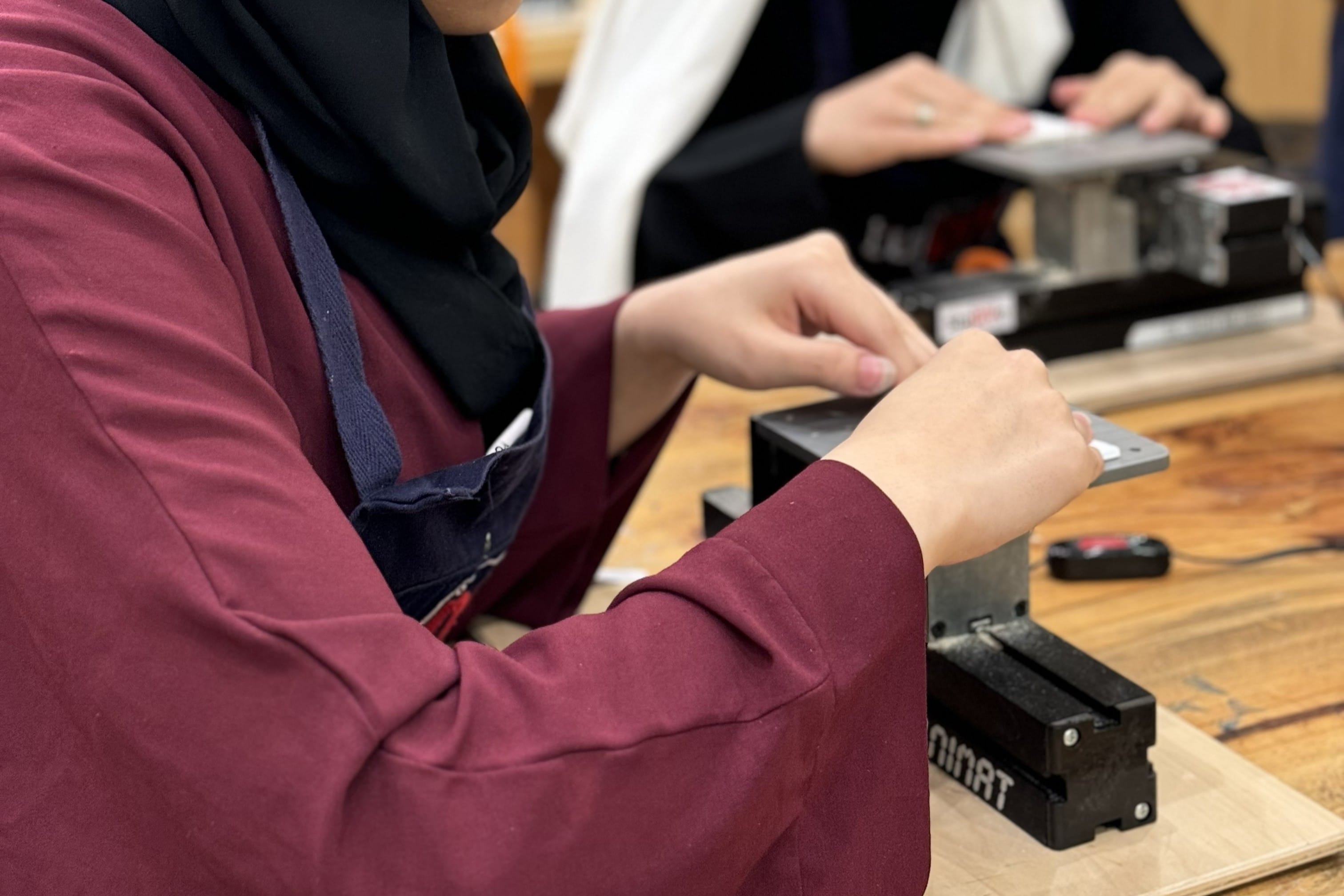
If you have ever stood in a Dubai mall watching your child run between trampoline parks and arcade machines, you know the feeling: there has to be something better. Many parents land on woodworking workshops as the answer, and rightly so. Done well, a kids woodworking session is one of the few experiences that combines focus, real skills, and a take-home project. But not every workshop is set up the same way.
This guide is a parent-to-parent walkthrough of what separates a good kids woodworking workshop from a forgettable one: what to ask before you book, what to look for on day one, and how to keep the momentum going between sessions. We have refined these tips after running thousands of sessions for kids ages 5–14 across our Dubai (Times Square Center) and Abu Dhabi (Abu Dhabi Mall) studios.
The single most important signal of a quality workshop is the instructor-to-student ratio. A workshop running 12 kids on one instructor cannot maintain direct line-of-sight on every cut. The safe upper limit is six to eight kids per instructor, and ages 5–8 should sit closer to 1:6. If a workshop is vague about its ratios, that is your answer.
The second signal is real take-home projects. A good workshop sends every child home with something they built: a phone stand, a name sign, a marble maze. Kits do not count. Worksheets do not count. Painted MDF cutouts do not count. The point of woodworking is that your child measures, cuts, sands, and assembles something they will keep.
The third signal is the safety briefing. Every session should start with five to ten minutes of explicit instruction on tool handling, eye protection, and what to do if something feels off. If the instructor skips straight to the project, the workshop is moving too fast.
Get there 10 minutes early. Bring closed-toe shoes for your child (most studios require them). Wear clothes that can take a bit of sawdust. Skip the breakfast pep talk. The safety briefing covers everything they need to know, and instructor delivery lands better than parent delivery on day one.
If your child is nervous, sit in the viewing area for the first session. Most kids look back to check on their parent for the first 15 minutes, then disappear into the project. By the end of the session, they are usually negotiating to come back next week.
You do not need a workshop at home to keep the momentum. A few low-cost moves go a long way:
We built StuDIYo Lab around the gap we saw in Dubai: a city full of kids' entertainment, but very little hands-on, take-home craft. Our studios run the safety framework above by default, with 1:6 to 1:8 ratios, mandatory PPE, age-graded tools, and real take-home projects every session. Parents are welcome to watch from our viewing area before booking.
If you are still researching, our pillar guide on whether woodworking is safe for kids has the full safety breakdown, and our overviews of woodworking classes in Dubai and carpentry workshops in Dubai cover pricing and age groups. If you are ready to book, browse our kids woodworking workshops in Dubai and Abu Dhabi or contact us with questions. We are happy to walk parents through our setup before any commitment.